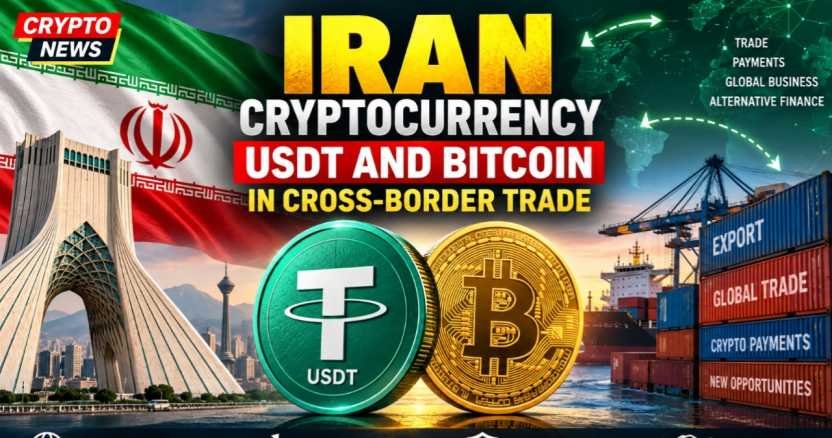
Iran cryptocurrency adoption is reportedly expanding as exporters turn to USDT and Bitcoin for cross-border trade amid financial restrictions.
Iran cryptocurrency adoption is reportedly gaining new momentum as Iranian exporters increasingly look toward digital assets for international trade payments. Reports suggest that Iran’s central bank has eased some restrictions, allowing businesses greater flexibility in handling foreign-currency earnings.
According to a report cited by the Financial Times, Iranian authorities are reportedly taking a more flexible approach toward exporters using cryptocurrencies such as Bitcoin (BTC) and Tether’s USDT for cross-border transactions.
Iran Cryptocurrency Use Expands Amid Financial Restrictions
The latest developments highlight the growing role of Iran cryptocurrency activity as the country continues to face restrictions on access to international banking and payment networks.
Iranian exporters have reportedly been encouraged to return foreign-currency earnings to the country through available channels. This approach could reduce reliance on traditional financial institutions and provide businesses with additional ways to move value internationally.
Cryptocurrency networks can operate independently of conventional banking infrastructure, making digital assets an alternative payment option in markets where access to international financial services is limited.
Why USDT Matters to Iran Cryptocurrency Adoption
USDT is particularly important to the Iran cryptocurrency market because the stablecoin is designed to maintain a value close to the US dollar.
Unlike Bitcoin, whose price can fluctuate significantly, USDT is intended to provide a dollar-linked digital asset. This characteristic could make stablecoins more practical for businesses seeking to transfer value internationally while avoiding some of the limitations associated with traditional banking channels.
Bitcoin also remains relevant because transactions are processed through a decentralized blockchain network rather than through a single central financial institution.
However, cryptocurrency payments come with risks, including regulatory changes, market volatility, transaction costs and compliance requirements.
Around $10 Billion in Crypto Activity
The scale of Iran cryptocurrency activity has also attracted attention from blockchain analytics companies.
According to data cited from TRM Labs, approximately $10 billion worth of cryptocurrency assets circulated through Iran during 2025.
Chainalysis has also pointed to Iran’s limited access to global payment infrastructure as one factor contributing to the country’s cryptocurrency activity.
These developments suggest that digital assets have become more than an investment vehicle for some Iranian users and businesses.
Iran Cryptocurrency Adoption Goes Beyond Investment
The latest reports highlight an important use case for cryptocurrency: international payments.
While Bitcoin and stablecoins are often associated with investing and trading, blockchain technology can also be used to transfer digital value across borders.
For businesses operating in an environment where traditional international payment systems are difficult to access, Iran cryptocurrency adoption could provide an alternative financial route.
However, the use of digital assets for cross-border commerce remains subject to regulatory, legal and compliance considerations. Policies can also change rapidly because of geopolitical developments and international sanctions.
What Iran Cryptocurrency Growth Could Mean for Bitcoin and USDT
The reported changes could further increase attention on Iran cryptocurrency activity and its role in international commerce.
Bitcoin’s decentralized structure and USDT’s dollar-linked design give businesses different options for moving digital value across borders. The situation also demonstrates how cryptocurrency adoption can accelerate when conventional financial infrastructure becomes difficult to use.
For the wider cryptocurrency industry, Iran’s experience could strengthen the argument that blockchain networks have applications beyond speculation and investment.
At the same time, businesses and individuals should carefully consider the legal, regulatory and financial risks associated with cryptocurrency transactions.
Disclaimer: This article is provided for informational purposes only and should not be considered financial, investment, legal or trading advice.